
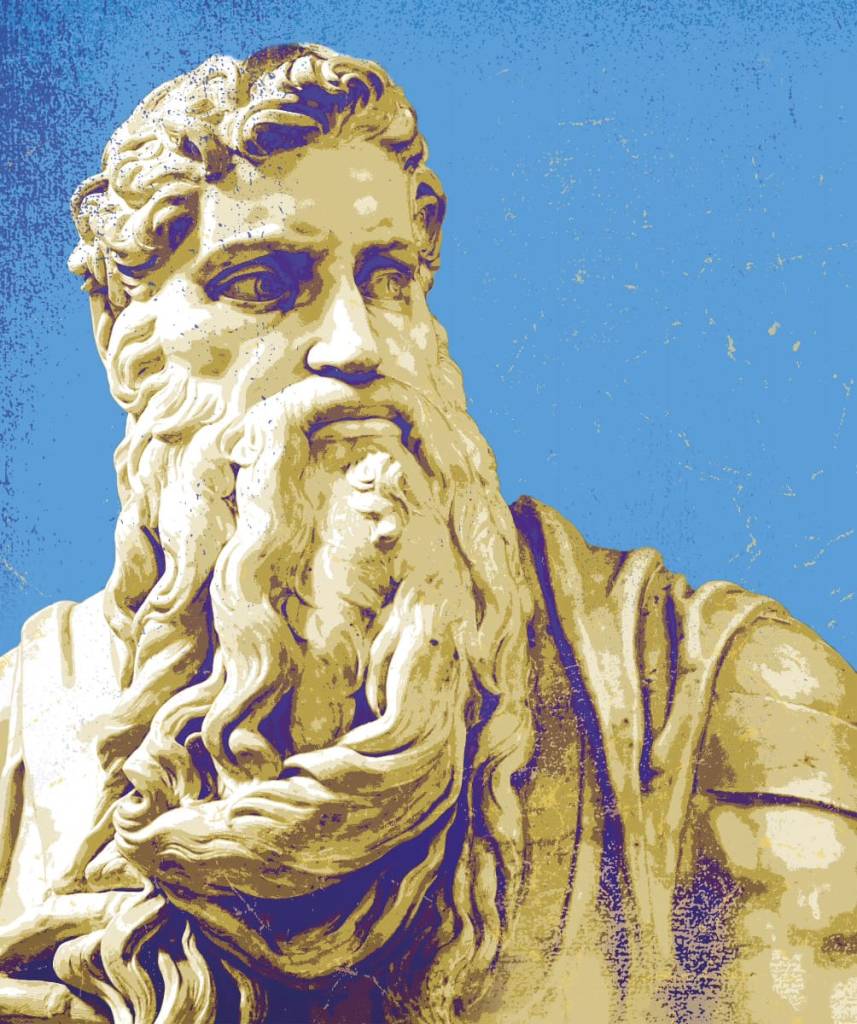
“This is what the Lord says: Let my people go, so that they may worship me.”
Moses
Chosen by God to free the Israelites from slavery in Egypt, Moses led them across the desert for 40 years to Canaan, the land that God had promised. As the first prophet to proclaim the coming of the Messiah, and the receiver of the Ten Commandments, Moses is remembered in Jewish tradition as the greatest prophet of the Bible.
Born to Hebrew parents (Israelites) in what would become Egypt, Moses lived, according to most scholars, between 14th–13th centuries bce.
The Israelites had been slaves in Egypt for around 400 years, and worried that they might form alliances with his enemies, the reigning Pharaoh (name unknown) ordered the execution of all newborn males to reduce their population. As a baby, Moses was hidden by his mother, and discovered by the Pharaoh’s daughter, who raised him at the royal court. As an adult, Moses killed an Egyptian slavemaster after he saw him beating a Hebrew slave. Fearing the death penalty, he fled Egypt for the neighboring area of Midian (believed to be in the Arabian Peninsula).
Power of God
In Midian, Moses spent the next 40 years living as a shepherd and married a fellow shepherd’s daughter, Zipporah. While tending his sheep on Mount Horeb, he saw a bush that burned but did not perish in the flames.
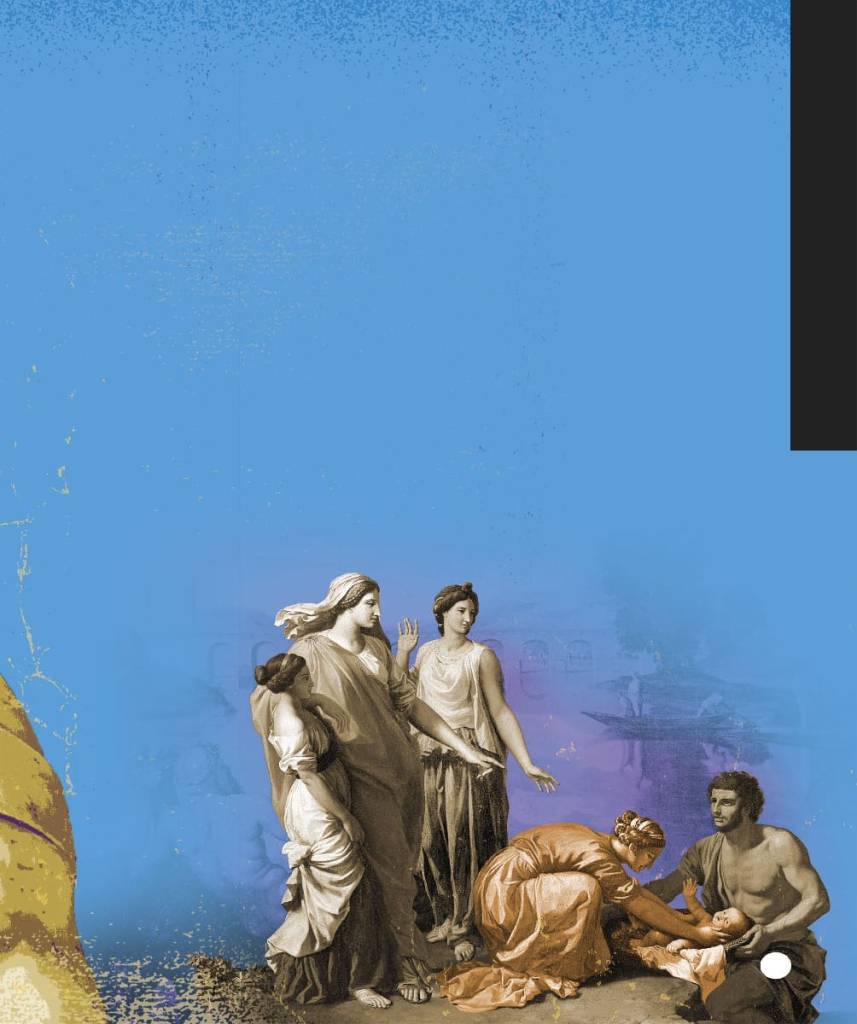
Moses was discovered in a reed basket along the banks of the River Nile by the Pharaoh’s daughter. She adopted him and raised him at the royal court.
“The Lord will fight for you; you need only to be still.”
Moses
When he investigated, God appeared and claimed that he had chosen Moses for a mission—to free the Israelites from slavery and lead them to the Promised Land (the land that God had pledged to Abraham and his descendants). At first, Moses was afraid and refused the task, but eventually he placed his faith in God and accepted the mission. Moses returned to Egypt and demanded that the Pharaoh release his slaves, warning him of God’s punishment, but he refused. God inflicted plagues that ravaged Egypt for months, and after the 10th plague, the Pharaoh finally agreed to release the slaves.
Searching for freedom
Moses led the Israelites out of Egypt and into the Arabian Desert, and Pharaoh, who regretted his decision to free his workers, sent his chariots to chase them down. When faced with the Red Sea, Moses called upon God, who parted the waves so he and the Israelites could pass, as Pharaoh’s chariots were washed away. Later, God appeared
to Moses at Mount Sinai, where he outlined laws that the Israelites must follow in exchange for God’s enduring blessing. Moses recorded these as the Ten Commandments, which still form the backbone of Judeo-Christian morality. According to Jewish tradition, God also dictated further teachings, which Moses compiled in the Torah, the most important text in Judaism. Moses became a channel between God and the Israelites, and his direct communication with God distinguishes him from any other prophet in the Bible.
The Promised Land
As God’s messenger, Moses led the loyal Israelites into the desert, where they sought to find the Promised Land. There, he sent out 12 chiefs in search of the land for 40 days. When 10 returned despondent at what theyhad found, God punished the Israelites for their lack of faith and made them wander the desert for another 40 years, until the generation of doubters had perished. Moses led the Israelites to within sight of the Promised Land, where he handed them over to the care of his assistant, Joshua, and climbed Mount Nebo, where he died, aged 120, having never reached the Promised Land himself.

The Ten Commandments, in Judeo-Christian thought, are essential moral teachings. Spread by Moses to the Israelites, they consist of a number of required and forbidden practices.
DO
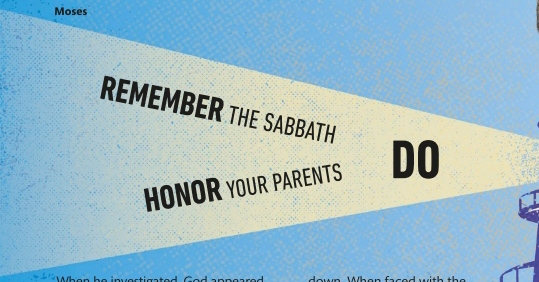
DO NOT

 Vnoteshistory