ALEXANDER 356-323BCE

Considered by historians to have been one of the greatest commanders of all time, Alexander the Great‘s tactics influenced military strategists for centuries. Skillful, daring, and ambitious, by the age of 32, he had established an empire that stretched from Greece and Egypt to the Indian subcontinent.

Born in Pella, in the ancient Greek kingdom of Macedonia, Alexander was the son of Philip II
and his fourth wife, Olympias. In Alexander’s early education, he strongly identified with Achilles and Odysseus, the heroes of Homer’s epics, The Iliad and The Odyssey, and from an early age, he sought to emulate their achievements. When Alexander was just 16 years old, he ruled Macedonia as regent in his father’s absence, crushing an uprising in Thrace. Two years later, Alexander led the cavalry charge at the Battle of Chaeronea in 338 bce, and, according to the GreekRoman biographer Plutarch, he was the first to force a breach in the enemy line, winning a key victory for his father.

MILESTONES

INSPIRED BY HOMER Tutored by Aristotle in 343 bce, and reads Homer’s works, The Iliad and The Odyssey.

BECOMES KING Succeeds his father and becomes King of Macedonia, 336 bce. Crushes early dissent.

BUILDS ALEXANDRIA Founds a new Greek city, Alexandria, 331 bce, as a Hellenistic center in Egypt.

DEFEATS PERSIA Takes control of Persian Empire after decisive Battle of Gaugamela, 331 bce.

The new king

After Philip II’s assassination in 336 bce, Alexander, aged 19, became king of Macedonia. Immediately, he began quelling rebellions sparked by the death of his father. After killing his main rival, Attalus, Alexander crushed an uprising in the Greek city of Thebes—the first example of his use of ruthless terror to suppress rebellion. Alexander’s first military expedition saw him
defeat an uprising by local chiefs in the Danube Valley, north of Macedonia, in 335 bce. In order to safely cross the river and gain the upper hand, he moved his entire army, with horses and equipment, across the river overnight on rafts made of animal skins stuffed with straw. Alexander’s ability to improvise solutions under pressure, based on an astute reading of the landscape and situation, would be demonstrated throughout his career.

Building an empire

With his European lands secure, the 22year-old Alexander turned his attention east toward Persia, intent on further conquests. Leading a carefully prepared expedition, he crossed the Hellespont, the body of water separating Europe from Asia Minor, into Anatolia. Alexander’s powerful army consisted of 5,000 Macedonian and Thessalonian cavalry and 40,000 Macedonian and Greek infantry, including Thracian javelin throwers and Cretan archers. His army’s first victory against the Persians came at Granicus (Turkey) in 334 bce. There, he used tactics gleaned from his father;Philip II had long utilized a phalanx formation—a huge rectangular mass of soldiers armed with shields and pikes. Unlike previous uses of this formation, Alexander’s version of the phalanx included skirmishers and cavalry, which reinforced their attack. The next year, Alexander confronted
the Persian King Darius III and his army on the plains of Issus (Turkey). In one of the decisive battles of the ancient world, Alexander defeated the much larger Persian army, but Darius escaped. Alexander then moved on to Egypt, part of the Persian Empire, taking Tyre (Lebanon) and Gaza (Palestine) en route.

“Approach me, therefore, as the lord of all Asia.”

Alexander the Great, 332 bce
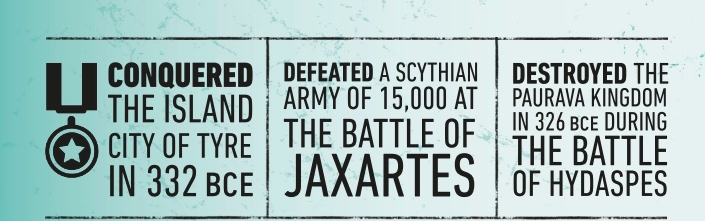
While in Egypt, Alexander used a passage from The Odyssey to identify a nearby fishing village as the site on which to build a city. He named it Alexandria, and it went on to become a center for trade between Europe and the East and the largest city in the ancient world. In 331 bce, Alexander defeated Darius III at Gaugamela (Iraq), although he was once again outnumbered. Shortly after, he captured the administrative capital of Persia: Babylon (Iraq). Darius fled once more, but was later murdered by a small group of conspirators led by his cousin Satrap Bessus. In 330 bce, Alexander proclaimed himself successor to the Persian throne. The Macedonians believed this would bring an end to his campaigns, but he pressed on, enforcing his
claim on all Persian domains and extending his empire into India.

The turning point

After invading the Punjab, in
Northern India, in 326 bce, Alexander
defeated King Porus of the Pauravas at the Battle of the Hydaspes. His army then faced another battle at the River Hyphasis (Beas) in the Himalayas, but his men were outnumbered and suffered huge losses. Demoralized and exhausted at the prospect of further military campaigns, Alexander’s armies began to mutiny. Heeding his people’s needs, Alexander agreed to return home. Part of Alexander’s success in building his empire came from him embracing the customs of the civilizations that he conquered. However, these were not met with such enthusiasm by his Macedonian followers and veterans. Many became jealous as increasing numbers of new Persian followers found favor with Alexander. Discontent was expressed in a series of mutinies that Alexander violently suppressed.

His legacy

When he died of a fever in Babylon on June 11 323 bce, he left no heir (his son by his wife Roxana, a Sogdian princess, was born after his death). However, he left a strong legacy as the passage of his army led to unprecedented cultural and religious exchanges between East and West, as well as the expansion of trade routes and the founding of many cities. In antiquity, his fame was unequalled, and he was so revered by his followers that his embalmed body was taken to Egypt where it was displayed for more than 500 years.


PHILIP II OF MACEDON

Philip II (382–336 bce) was king of Macedon and Alexander’s father.

When Philip ascended the throne in 359 bce, he embarked on a long campaign to reform and strengthen the Macedonian army. He brought peace to his country and, following the Battle of Chaeronea in 338 bce, established dominance over the Greek city-states, thereby paving the way for his son’s far-reaching conquests. In 336 bce, Philip was assassinated by his bodyguard while planning an invasion of the Persian Empire.

Alexander the Great
Addressing troops before the Battle of Issus as quoted in Anabasis Alexandri by Arrian of Nicomedia, Book II, 200 ce

BUDDHA

Better known as the Buddha, Śiddhartha Gautama is revered as the founder of one of the oldest and most widespread of world faiths—Buddhism. An Eastern philosophy and religion, it teaches that life is a process of working toward freedom from suffering.

Śiddhartha (meaning “he who achieves his aim”) Gautama was born into the Shakya tribe in Lumbini (modern-day Nepal), in the 6th century bce. The tribe was poor and isolated, but Śiddhartha’s father, Śuddhodana, was the leader, and built a palace where his son, the prince, could live in luxury.

Path to enlightenment

According to Buddhist tradition, Śiddhartha’s father ordered the people to hide all signs of human suffering from his son. When Śiddhartha finally ventured out of the palace without his father’s knowledge, he was deeply shocked to learn of illness, old age, and death. In response, he left his home, his wife, and his newborn son Rāhula, to seek the truth of human existence. For a few years, Śiddhartha tried to emulate holy men (such as the hermit saint
Alara Kalama), and follow a life of study, prayer, and meditation, but their guidance failed to help him achieve spiritual release. Then, meditating alone under a pipal tree (Ficus religiosa), he came to see things as they truly were. When he realized that the causes of suffering are greed, selfishness, and stupidity, and that eliminating these traits would free people from suffering, he reached Nirvana, a state of pure enlightenment, and became the Buddha (“he who is awake”).

“All conditioned things are impermanent—when one sees this with wisdom, one turns away from suffering.”

The Buddha

MILESTONES

KEPT FROM REALITY Spends his life until early adulthood in his father’s palace shielded from human suffering.

SHOCKED BY TRUTH Upon leaving the palace, discovers reality of life. He leaves his family to become a holy man.

SOURCE OF SUFFERING After meditating, learns that greed, stupidity, and selfishness are causes of human misery.

PATH TO NIRVANA Develops philosophy of Four Noble Truths and Eightfold Path as a means to reach Nirvana.

SPREADS HIS IDEAS Aged 35, attracts his first disciples. Founds Sangha (monastic order) and sets out dharma (teachings).


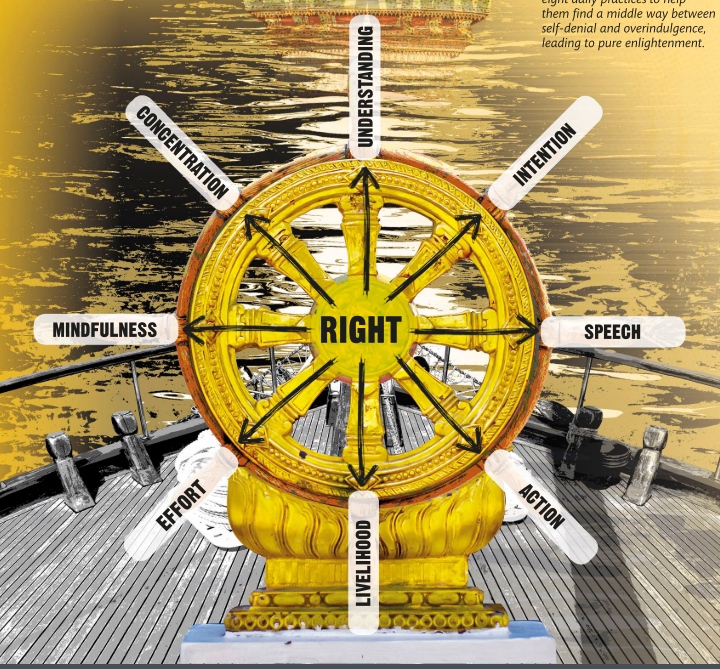
During the Buddha’s first sermon, he “set in motion the wheel” of his
DALAI LAMA
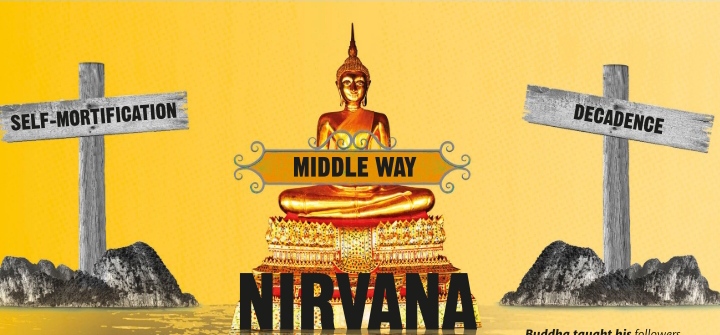
teachings (dharma). He spoke of the Four Noble Truths: dukkha (the truth of suffering); the arising of dukkha (the causes of suffering); the stopping of dukkha (the end of suffering); and the path to the stopping of dukkha (path to freedom from suffering). He also set out the Eightfold Path—eight practices to be integrated into daily life: right understanding, right intention, right speech, right action, right livelihood, right effort, right mindfulness, and right concentration. By embracing these habitual behaviours, the Buddha taught that each person could achieve a balance between self-mortification and decadence known as the Middle Way.

Teachings and legacy

While some of the Buddha’s teachings, such as forbidding the slaughter of living beings, already existed in other schools of thought, his emphasis on equality between human beings and compassion for the poor was a revolutionary concept. The Buddha spent the rest of his life
travelling through India and preaching the dharma. However, he did not claim to be a god or a prophet—only a human being who had reached the highest possible understanding of reality. It is said that when he died he told his disciples not to follow another leader. After the Buddha’s death, his teachings
were passed through eastern Asia orally for 400 years before being written down. He also came to be venerated in other religions, such as the Ahmadiyya sect of Islam, while Hindus see him as one of ten incarnations of the god Vishnu.


DALAI LAMA

Buddhist monk Tenzin Gyatso is the 14th Dalai Lama, and the spiritual leader of Tibet.

The current lineage of Dalai Lamas began in the 14th century, and is believed to be successive incarnations of religious teachers who return to Earth to guide others. Since the 17th century, these spiritual masters have led the government in Tibet, until the 14th Dalai Lama went into exile in 1959 following a failed uprising against Chinese occupation. He has since become a world figure for his campaign for Tibetan autonomy.


BUDDHISM GLOBAL FOLLOWERS

MOSES–(1391-1271 BCE)

“This is what the Lord says: Let my people go, so that they may worship me.”
Moses

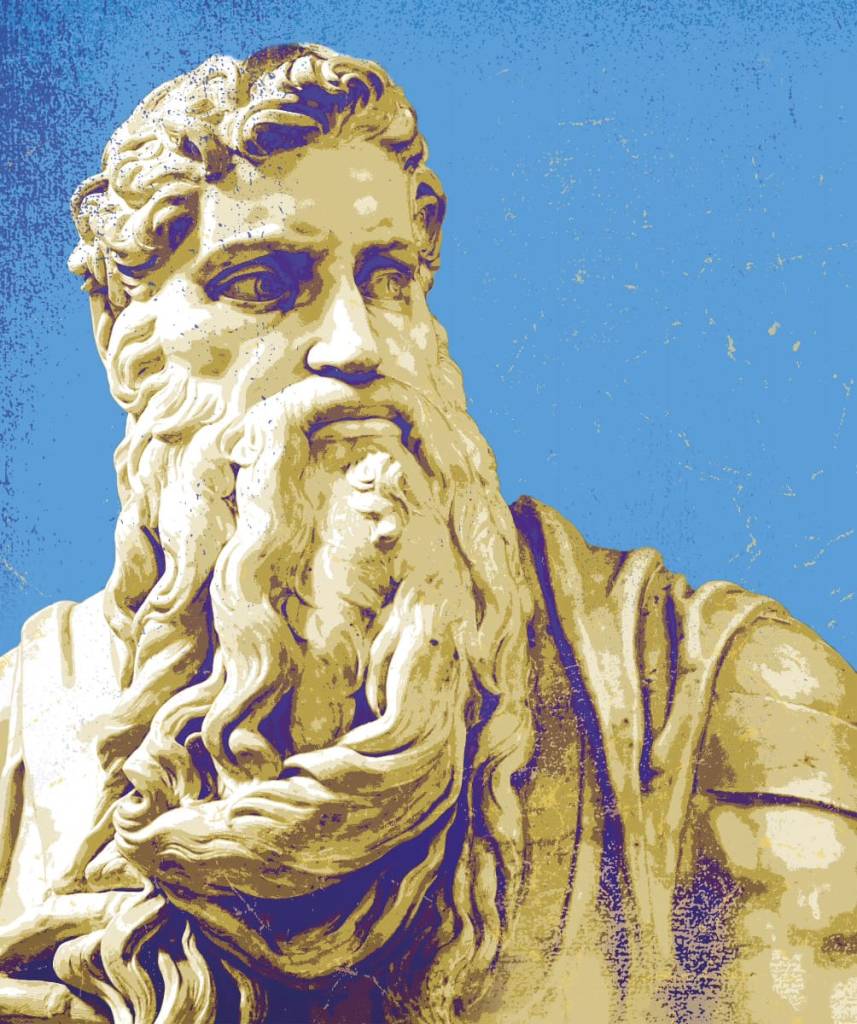
Chosen by God to free the Israelites from slavery in Egypt, Moses led them across the desert for 40 years to Canaan, the land that God had promised. As the first prophet to proclaim the coming of the Messiah, and the receiver of the Ten Commandments, Moses is remembered in Jewish tradition as the greatest prophet of the Bible.

Born to Hebrew parents (Israelites) in what would become Egypt, Moses lived, according to most scholars, between 14th–13th centuries bce.
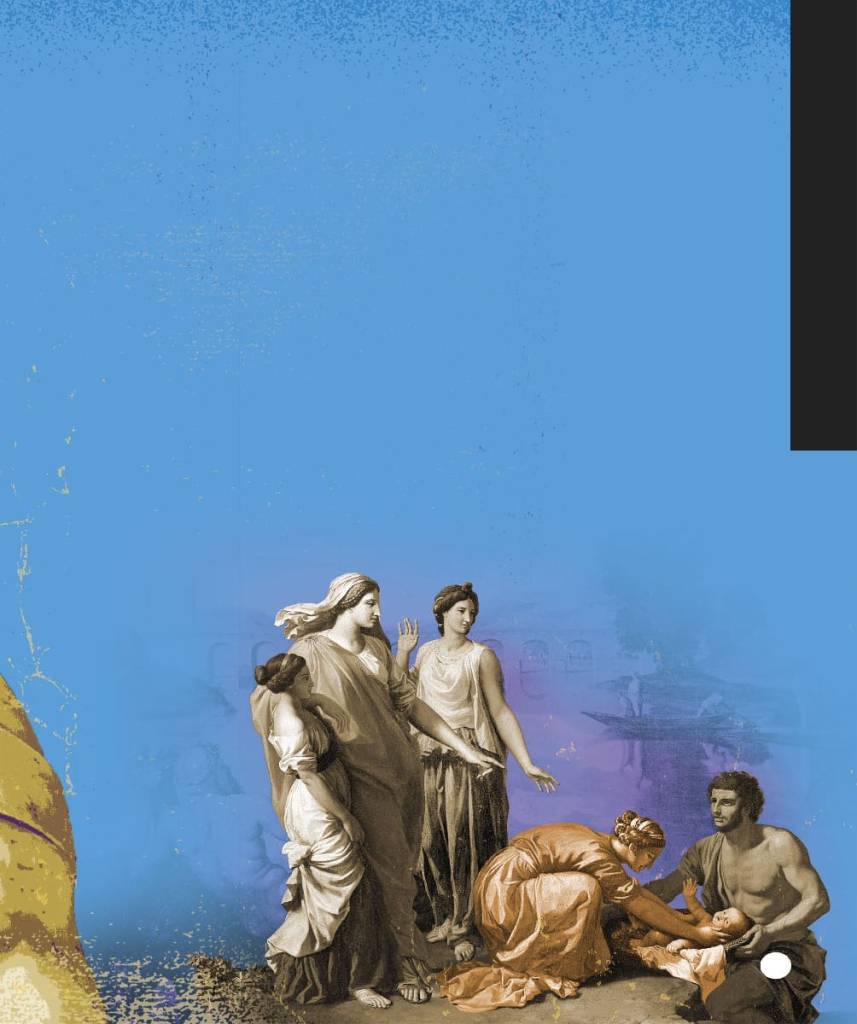
The Israelites had been slaves in Egypt for around 400 years, and worried that they might form alliances with his enemies, the reigning Pharaoh (name unknown) ordered the execution of all newborn males to reduce their population. As a baby, Moses was hidden by his mother, and discovered by the Pharaoh’s daughter, who raised him at the royal court. As an adult, Moses killed an Egyptian slavemaster after he saw him beating a Hebrew slave. Fearing the death penalty, he fled Egypt for the neighboring area of Midian (believed to be in the Arabian Peninsula).

Power of God

In Midian, Moses spent the next 40 years living as a shepherd and married a fellow shepherd’s daughter, Zipporah. While tending his sheep on Mount Horeb, he saw a bush that burned but did not perish in the flames.

Moses was discovered in a reed basket along the banks of the River Nile by the Pharaoh’s daughter. She adopted him and raised him at the royal court.

“The Lord will fight for you; you need only to be still.”
Moses

When he investigated, God appeared and claimed that he had chosen Moses for a mission—to free the Israelites from slavery and lead them to the Promised Land (the land that God had pledged to Abraham and his descendants). At first, Moses was afraid and refused the task, but eventually he placed his faith in God and accepted the mission. Moses returned to Egypt and demanded that the Pharaoh release his slaves, warning him of God’s punishment, but he refused. God inflicted plagues that ravaged Egypt for months, and after the 10th plague, the Pharaoh finally agreed to release the slaves.

Searching for freedom

Moses led the Israelites out of Egypt and into the Arabian Desert, and Pharaoh, who regretted his decision to free his workers, sent his chariots to chase them down. When faced with the Red Sea, Moses called upon God, who parted the waves so he and the Israelites could pass, as Pharaoh’s chariots were washed away. Later, God appeared
to Moses at Mount Sinai, where he outlined laws that the Israelites must follow in exchange for God’s enduring blessing. Moses recorded these as the Ten Commandments, which still form the backbone of Judeo-Christian morality. According to Jewish tradition, God also dictated further teachings, which Moses compiled in the Torah, the most important text in Judaism. Moses became a channel between God and the Israelites, and his direct communication with God distinguishes him from any other prophet in the Bible.

The Promised Land

As God’s messenger, Moses led the loyal Israelites into the desert, where they sought to find the Promised Land. There, he sent out 12 chiefs in search of the land for 40 days. When 10 returned despondent at what theyhad found, God punished the Israelites for their lack of faith and made them wander the desert for another 40 years, until the generation of doubters had perished. Moses led the Israelites to within sight of the Promised Land, where he handed them over to the care of his assistant, Joshua, and climbed Mount Nebo, where he died, aged 120, having never reached the Promised Land himself.

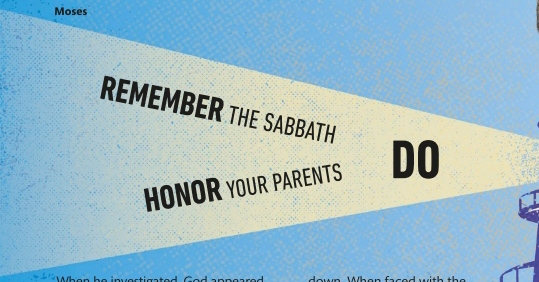
The Ten Commandments, in Judeo-Christian thought, are essential moral teachings. Spread by Moses to the Israelites, they consist of a number of required and forbidden practices.

DO

DO NOT

Blog at WordPress.com.

Up ↑

Design a site like this with WordPress.com
Get started